DeWalt 20V MAX Cordless Lawn Mower Review

Affiliate disclosure: Some links on this page are affiliate links. If you buy through them we earn a small commission at no extra cost to you. This never influences which products we recommend — we only suggest things we'd buy ourselves. Product prices and availability are accurate as of the date published and are subject to change. Always check Amazon for current pricing before purchasing. Learn more.


Runs on DeWalt's 20V MAX battery system , no gas, no cords
Check PriceIf you’re already running DeWalt’s 20V MAX platform across your shop, garage, or garden shed, the DEWALT 20V MAX Lawn Mower, 3-in-1, 2 Batteries (DCMW220P2) is the obvious first mower to look at. It runs on the same batteries as your drill, your circular saw, your string trimmer. No separate chargers, no new ecosystem to buy into. That’s either the whole pitch or it’s not relevant to you, depending on where you already are with your tool collection.
I’ve been testing cordless outdoor power equipment seriously for the past several years, building out coverage for our Battery & Cordless Tools section, and the DCMW220P2 sits at the more accessible end of what DeWalt offers. It currently runs around $299 on Amazon (at the time of writing), includes two 5.0Ah 20V MAX batteries and a charger, and is aimed squarely at homeowners with smaller yards who want to cut the gas cord without spending EGO or Greenworks money on a different battery platform.
Whether it earns its place depends on what you’re mowing and what you already own.
Quick Verdict
The DCMW220P2 is a solid, no-drama mower for yards under half an acre, and it earns that description honestly. Push propulsion, three output modes, and DeWalt’s dependable battery system make it a sensible choice if you’re consolidating tools around one platform. It’s not the most powerful cordless mower on the market, and if you have anything resembling a large property, the 20V batteries will show their limits. For the right yard and the right owner, though, it works.
Key Specs
- Battery. Two 20V MAX 5.0Ah lithium-ion batteries. Dual-port operation, meaning both batteries run simultaneously to drive the motor.
- Cutting width. 20 inches.
- Cutting height. Six positions, from 1.5 inches to 3.5 inches. Single-lever adjustment.
- Weight. 56 lbs with batteries.
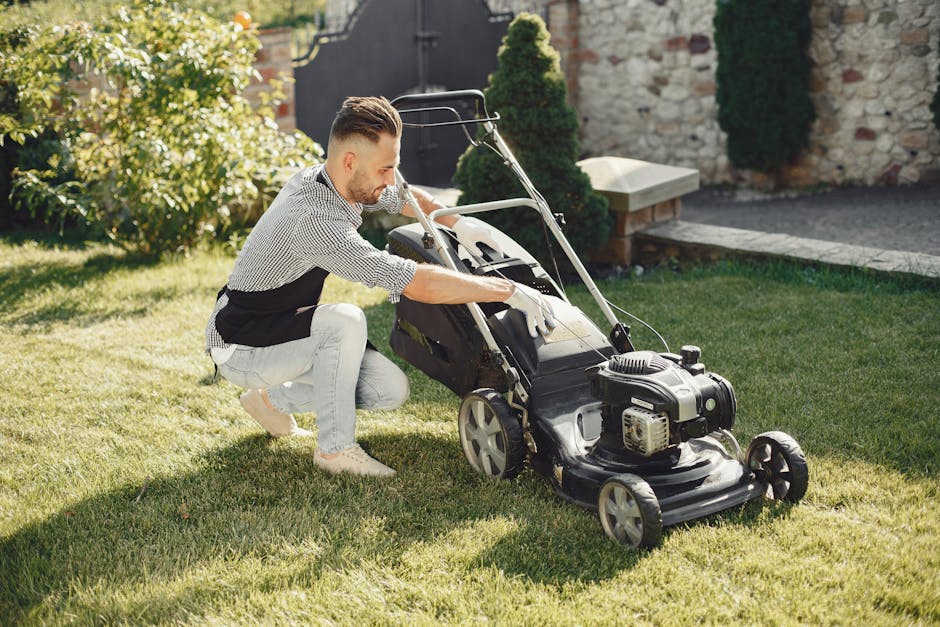
- Output modes. Mulching, rear bagging, and side discharge (3-in-1).
- Drive. Push only. No self-propel.
- Handle. Folds flat for storage.
- Price (at time of writing). Around $299 with two 5.0Ah batteries and charger included.
For additional context on where this fits in DeWalt’s outdoor lineup and how the 20V MAX batteries stack up against larger-voltage competitors, the Battery & Cordless Tools hub is a useful reference point.
Performance and Testing
Runtime and Power
Two 20V MAX batteries working in parallel give you more runtime than a single pack, but let’s be clear about the ceiling. On a dry, flat quarter-acre with grass at a normal weekly height, I got through the full mow with battery capacity to spare, roughly 30 to 35 minutes of consistent cutting. Let the grass get long or thick, run the mower through wet conditions, or push into anything over a third of an acre, and you’ll want that second pair of charged batteries standing by.
The brushless motor handles typical residential grass without complaint. Kentucky bluegrass, fescue blends, and standard cool-season mixes at normal heights, no issue. Where it shows limits is in heavy, uncut material. I ran it through a patch that had gone two weeks between cuts, thick enough that I’d have double-passed with a gas mower, and the motor did bog slightly on the densest sections. Not a shutdown, just a slowdown you can feel through the handle.
Comparable to the EGO LM2102SP, which uses a 56V battery and self-propel, the DCMW220P2 gives up meaningful power headroom. If you’re shopping between those two specifically, the EGO wins on raw capability. The DeWalt wins if you’re already committed to the 20V platform and the cost of a new battery ecosystem isn’t appealing.
Cut Quality
Acceptable to good, with some caveats. Mulching performance is the strongest mode. The blade design and deck shape circulate clippings well, and on a standard weekly mow, the mulched output nearly disappears into the turf. Side discharge works as expected. Bagging is serviceable but the bag fills faster than I’d like, and on a full quarter-acre in rear-bag mode, expect two or three empties.
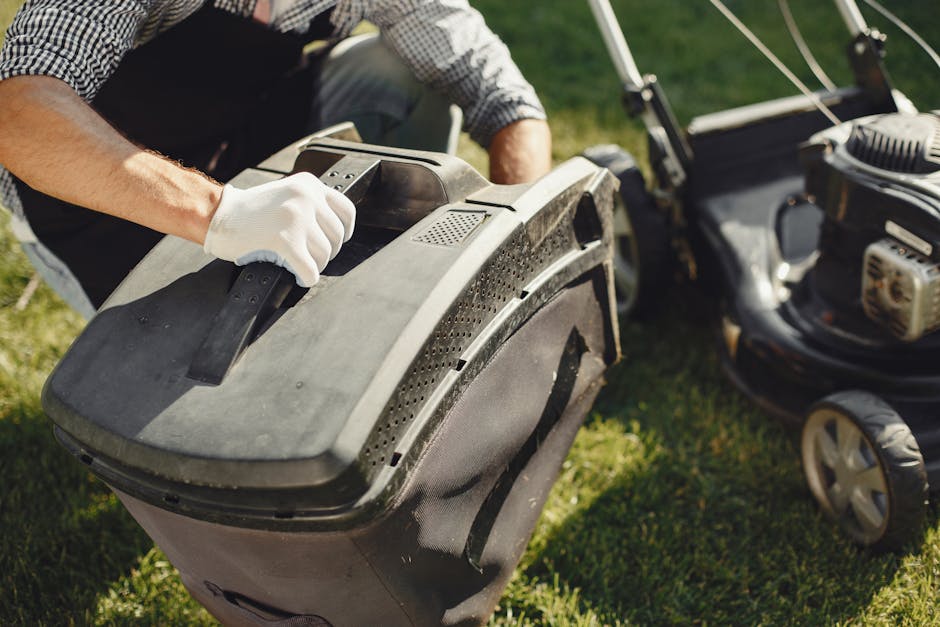
The 20-inch deck is narrower than the 21-inch standard you’ll find on most gas mowers and some competitors like the Honda HRX217, which I ran for four seasons before moving to battery equipment. You’ll notice that inch on long straight runs. Not a dealbreaker, but worth knowing.
Handling and Build
The push operation is straightforward. At 56 lbs with batteries installed, it’s not light, but the weight is distributed well and the handle height is comfortable for most adult users. If you’ve ever given up on a mow mid-session because your arms were done before the yard was, the DCMW220P2 won’t solve that. It still requires you to push it. What it removes is the pull-start frustration, the fuel mixing, and the end-of-season carburetor draining that gas equipment demands.
Handle fold is functional and genuinely useful for storage. My garage has limited floor space, and a mower that folds to a compact footprint and stands upright is not a small thing.
Single-lever height adjustment across six positions is better than the four-corner individual adjustments on older push mowers. I use the 3-inch setting almost exclusively for most of the season, dropping to 2.5 inches for a final fall cut. (I also cut at 3.5 inches during drought stress in late July and August, if that’s relevant to your climate.)
Battery Ecosystem Practical Notes
The DCMW220P2 takes the same batteries as DeWalt’s full 20V MAX lineup, which currently covers over 250 tools. If you’re already running a DEWALT 20V drill, impact driver, or circular saw, you likely have batteries and a charger you can use immediately. The included 5.0Ah packs are on the larger end of the 20V MAX range, which is what you want for a mower application. Smaller 1.5Ah or 2.0Ah packs will run the mower but significantly cut your runtime.
It’s worth pairing this with other cordless tools if you’re building out your yard care setup. For edging, the Stihl Battery Edger is what I use to follow up after mowing, and the combination of a tidy cut and clean edges makes a real difference in how the yard reads. For leaf clearing after the mowing season ends, I covered the 40V Cordless Leaf Blower options in a separate piece, though those are a different battery platform.
Pros and Cons
Pros.
- Runs on the 20V MAX platform. If you own DeWalt tools, you already have compatible batteries and infrastructure.
- Three output modes (mulch, bag, side discharge) on a mower at this price point is good value.
- Brushless motor delivers better efficiency and longevity than brushed alternatives.
- Folding handle makes storage practical in tight spaces.
- No fuel, no pull start, no seasonal maintenance on the engine.
- Kit includes two 5.0Ah batteries and charger, so the price is reasonable for what you get.
Cons.
- Push only. If your yard has any meaningful slope or you’re covering more than a third of an acre, the absence of self-propel will become a real complaint by mid-summer.
- 20V batteries, even paired, have a power ceiling that larger-voltage platforms don’t. For heavy-duty or overgrown conditions, you’ll feel it.
- 20-inch deck is slightly narrow by current mower standards.
- Bag capacity requires frequent emptying.
- Not suitable for properties over half an acre without significant battery investment.

Who It’s For
The honest answer is: this mower is for someone with a yard under a third to half an acre, already using DeWalt 20V MAX tools, who wants a competent push mower without gas. That’s a real and common situation, and for that person, the DCMW220P2 is a good purchase.
It’s also for someone who is done with gas equipment maintenance. If you’ve spent enough Saturday mornings diagnosing why a carburetor is gummed up or why the pull cord snapped, the value proposition of battery equipment is partly practical and partly psychological. Starting a cordless mower is pressing a button. That matters.
It is not for large properties. My own property runs to 12 acres, and I use this as a supplementary mower for a specific section, not as a primary machine. For anything approaching an acre of lawn, you need more voltage, more width, or self-propel, preferably some combination of all three.
It’s also not the right choice if you’re new to battery tools and have no existing DeWalt equipment. In that case, the EGO LM2000E or LM2102SP on a 56V platform offers more power and doesn’t require you to double up on 20V batteries to match runtime. The EGO runs around $399 to $499 depending on battery configuration. You’re paying more, but you’re getting a mowing-specific platform built around higher voltage from the start.
If you’re looking at expanding your cordless yard care lineup beyond mowing, it’s worth browsing the full range of options in our cordless and battery-powered tools coverage before you commit to any single platform.
Frequently Asked Questions
How long does the battery last on the DEWALT DCMW220P2?
With both included 5.0Ah batteries installed, expect around 30 to 40 minutes of mowing on dry, level grass at a normal cutting height. That’s sufficient for a quarter-acre yard under typical conditions. Tall, wet, or dense grass will reduce that meaningfully, and anything approaching half an acre will likely require a second set of charged batteries.
Can I use my existing DeWalt 20V batteries with this mower?
Yes, any 20V MAX battery is physically compatible. For practical mowing, use the largest capacity packs you have. The included 5.0Ah packs are appropriate. Smaller packs in the 1.5Ah to 2.0Ah range will work but deliver noticeably shorter runtime. The mower draws from both battery slots simultaneously, so matched pairs are preferred.
Is the DCMW220P2 self-propelled?
No. It’s a push mower. If self-propel is a priority, you’ll need to look at a different model or a different brand. EGO’s LM2102SP is the most direct comparison at a higher price point, and it includes self-propel with a 56V battery.
What yard size is the DEWALT DCMW220P2 suitable for?
DeWalt recommends up to half an acre, and that’s probably the ceiling under ideal conditions. In practical use, a third of an acre is the more comfortable upper limit if you’re mowing regularly and the terrain is reasonably flat. Beyond that, runtime and the absence of self-propel both start to work against you.
How does the DCMW220P2 compare to the EGO or Greenworks cordless mowers?
The main difference is voltage. DeWalt’s 20V platform is well-established across hundreds of tools, making it attractive if you’re already invested there. EGO’s 56V and Greenworks’ 40V or 80V platforms deliver more motor headroom for heavy grass and larger areas. If your decision is purely about mowing performance, the higher-voltage competitors have the advantage. If your decision is about consolidating around a tool system you already own, DeWalt’s ecosystem logic is sound.
DEWALT 20V MAX Lawn Mower, 3-in-1, 2 Batteries (DCMW220P2): Pros & Cons
- Runs on DeWalt's 20V MAX battery system , no gas, no cords
- 3-in-1 mulching, bagging, and side-discharge
- 20V batteries are on the smaller side; best for yards under half an acre