Bird Feeders for Peanuts: Types & Options

Affiliate disclosure: Some links on this page are affiliate links. If you buy through them we earn a small commission at no extra cost to you. This never influences which products we recommend — we only suggest things we'd buy ourselves. Product prices and availability are accurate as of the date published and are subject to change. Always check Amazon for current pricing before purchasing. Learn more.
Quick Picks

Droll Yankees Yankee Flipper Squirrel-Proof Bird Feeder
Weight-activated motor spins the perch when a squirrel lands , reliably deters them
Check Price
Brome Squirrel Buster Plus Bird Feeder with Cardinal Ring
Passive weight-activated cage closes seed ports when squirrels grab on , no batteries needed
Check Price
Droll Yankees Classic Sunflower Seed Bird Feeder, 20-Inch
Ring Pull Advantage lid removes with one hand for fast, mess-free refilling
Check Price| Product | Price Range | Top Strength | Key Weakness | Buy |
|---|---|---|---|---|
| Droll Yankees Yankee Flipper Squirrel-Proof Bird Feeder best overall | $$ | Weight-activated motor spins the perch when a squirrel lands , reliably deters them | Requires charging , dead battery means squirrels have free access | Check Price |
| Brome Squirrel Buster Plus Bird Feeder with Cardinal Ring also consider | $$ | Passive weight-activated cage closes seed ports when squirrels grab on , no batteries needed | More involved cleaning than simple tray feeders | Check Price |
| Droll Yankees Classic Sunflower Seed Bird Feeder, 20-Inch also consider | $ | Ring Pull Advantage lid removes with one hand for fast, mess-free refilling | No squirrel deterrent , needs a baffle pole or dome purchased separately | Check Price |
| Nature's Hangout Window Bird Feeder with Strong Suction Cups and Seed Tray also consider | $ | Clear acrylic mounting brings birds within inches of indoor viewers , best close-up wildlife experience | Birds may take days or weeks to discover and trust a window-mounted feeder | Check Price |
Peanuts are one of the most reliable ways to attract a specific tier of bird: nuthatches, woodpeckers, blue jays, chickadees, titmice. If you’ve been putting out mixed seed in a standard tube feeder and wondering why your woodpecker sightings are inconsistent, seed mix is probably why. Peanuts change the visitor list, and a feeder designed for them changes the experience.
The problem is that “bird feeder for peanuts” covers a wider range of equipment than most buyers realize before they start shopping. Whole peanuts in the shell need a large-mesh feeder. Shelled peanuts can go into tube feeders with wider ports or dedicated peanut feeders with mesh sides. And then there’s the squirrel question, which is never not relevant.
I’ve tested a range of feeders across multiple seasons on a 12-acre property with a serious squirrel population and heavy woodpecker and nuthatch traffic. What follows are the feeders I’d actually buy again, one I’d buy for the first time now, and some that cover specific situations. Our full Bird Feeders & Baths section has more context on pairing feeders with poles, baffles, and placement strategy.
Top Picks
Squirrel Buster Plus Bird Feeder with Cardinal Ring: Best Overall
The Brome Squirrel Buster Plus is my main recommendation, and it’s been the workhorse feeder at my property for going on four seasons. The mechanism is passive weight-activation: when a squirrel grabs the outer cage, the weight closes the seed ports. No batteries, no charging, nothing to forget. It either works or it doesn’t, and in my experience it works.
The adjustable weight sensitivity is what separates it from most squirrel-proof competitors. The manufacturer ships it set to exclude squirrels, but you can tighten or loosen the threshold to also block large nuisance birds like grackles and European starlings if they’re a problem at your feeders. I’ve run mine at the mid-setting, which allows jays and woodpeckers through but stops the grackle mob that descends every April.
The cardinal ring at the bottom is a practical addition, not a marketing detail. Cardinals are ground and platform feeders by preference, and they’re often left out of tube feeder designs. The ring gives them a legitimate perch and does bring them in consistently.
Capacity and setup. The feeder holds 5.1 lb of seed and has six feeding ports, which means you’re not constantly refilling and multiple birds can feed simultaneously without stacking up. Setup takes about fifteen minutes the first time, mostly spent reading the adjustment instructions.
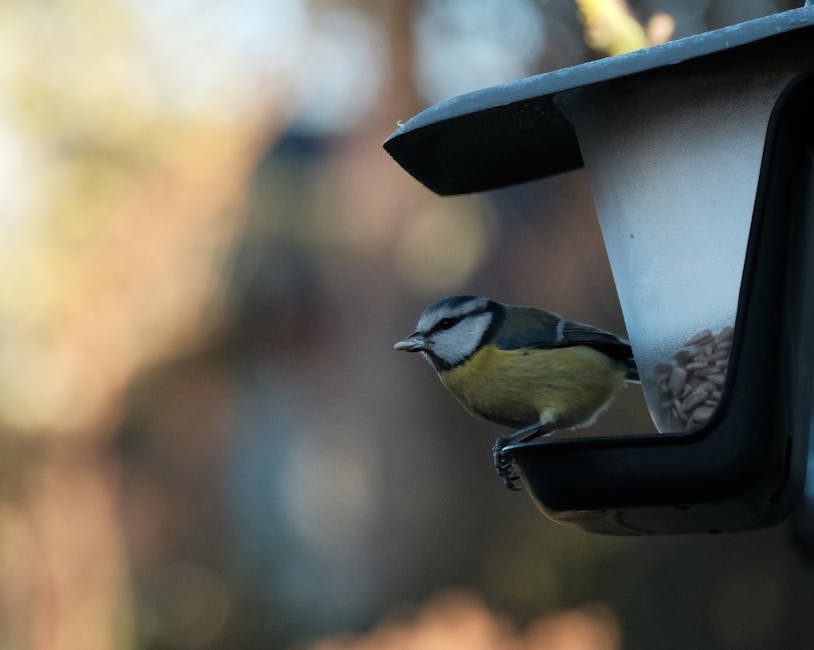
Cleaning. The one legitimate complaint I’d make is that cleaning is more involved than a simple tray or tube feeder. The cage assembly disassembles for washing, which is the right design, but it takes longer than a rinse-and-go tube. I clean mine every three to four weeks during active feeding months and once before storage. Budget for that time.
Price. Currently running around $55 to $65 on Amazon depending on configuration. Comparable to the Droll Yankees Yankee Flipper on price, but with no battery dependency.
Pros.
- Passive mechanism means no batteries, no charging, nothing to fail
- Adjustable weight threshold lets you exclude large birds as well as squirrels
- 5.1 lb capacity with six ports handles serious bird traffic
- Cardinal ring expands the species list
Cons.
- Cleaning is more involved than simpler feeder designs
- Weight sensitivity requires some trial and error to dial in for your specific conditions
,
Droll Yankees Yankee Flipper Squirrel-Proof Bird Feeder: Best for Households That Want the Show
I want to be straightforward about what the Yankee Flipper is and isn’t. It is a genuinely effective squirrel deterrent. The motor spins the perch when a squirrel’s weight triggers it, and squirrels cannot hold on. It is also, for anyone with children or grandchildren around, an exceptional piece of wildlife entertainment. Squirrels approach with confidence, grab the perch, and immediately regret it. (I have watched grown adults stop conversations to watch this happen.)
The practical specs are solid. Five-pound seed capacity, a wide tube that handles sunflower and mixed seed without clogging, USB-C charging, and a battery that Droll Yankees claims will last months per charge. My experience puts it closer to six to eight weeks with regular squirrel activity, which means you’re charging it roughly six times a year. That’s manageable.
The vulnerability is the charging requirement. If the battery dies and you don’t notice, the motor stops spinning and you have an expensive static feeder with no squirrel protection. I’d recommend building a monthly battery check into whatever routine you use for refilling. If you’re not the type to remember that kind of maintenance, the Squirrel Buster Plus is a more reliable long-term choice.
Droll Yankees manufactures in the United States and backs this feeder with a lifetime guarantee on parts, which matters when you’re spending in this price range.
Price. Around $150 to $170 currently. That’s a meaningful premium over the Squirrel Buster Plus, and the Flipper justifies it mostly on entertainment value and brand reliability rather than superior squirrel deterrence. Both mechanisms work.
Pros.
- Motor-driven perch spin deters squirrels reliably when the battery is charged
- 5 lb capacity, wide tube accommodates sunflower and mixed seed
- USB-C charging, rechargeable design
- Lifetime guarantee from a US manufacturer
Cons.
- Dead battery means no squirrel protection, with no warning system
- Higher price than passive squirrel-proof alternatives
- Motor components will eventually wear out with heavy use
,
Droll Yankees Classic Sunflower Seed Bird Feeder, 20-Inch: Best Budget Entry Point
If you’re new to feeding birds and want to start without spending $60 or more on your first feeder, this is the one to buy. The Droll Yankees Classic is a no-frills tube feeder that does its job without complications.
The Ring Pull Advantage lid is genuinely useful. It removes with one hand, which sounds minor until you’re refilling feeders in November with gloves on. Six feeding stations handle chickadees, finches, and smaller woodpeckers without crowding. The UV-stabilized polycarbonate tube holds up to direct sun without yellowing or cracking, which cheaper feeders from big-box stores frequently don’t manage after two or three seasons.
What it doesn’t do. There is no squirrel deterrent. None. If squirrels are anywhere near your property, this feeder will be raided constantly without additional protection. You need either a bird feeder pole with squirrel baffle or a separate dome baffle mounted above it. I’d factor that cost in before assuming this is actually a budget purchase. A decent baffle and pole combination runs another $30 to $60, which changes the math.
The 1 lb seed capacity is the other constraint. During fall and early winter when bird traffic is highest, you may be refilling every day or two. If that’s not something you want to manage, look at the larger-capacity feeders above.
Price. Around $20 to $25 on Amazon. Droll Yankees backs it with the same lifetime guarantee they offer across their line, which is reassuring for a budget purchase.
Pros.
- One-hand Ring Pull lid makes refilling fast and clean
- Six feeding stations, UV-stabilized tube, built to outlast cheap alternatives
- Lifetime guarantee
- Lowest entry price of the group
Cons.
- No squirrel deterrent whatsoever
- 1 lb capacity requires frequent refilling in active feeding months
,
Nature’s Hangout Window Bird Feeder with Strong Suction Cups and Seed Tray: Best for Small Spaces and Close-Up Viewing
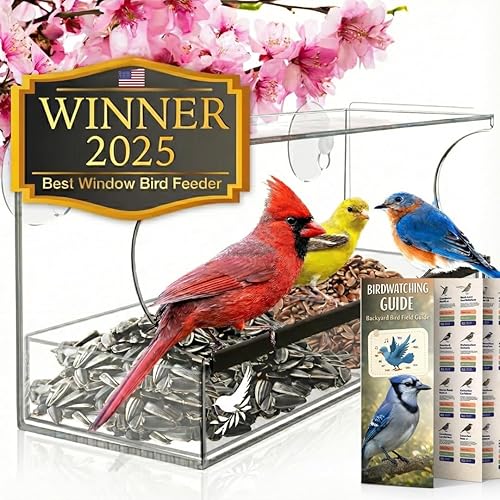
This feeder solves a different problem than the others on this list. If you don’t have a yard, don’t want to install a pole, or simply want birds within 18 inches of your face rather than 15 feet away in the garden, the Nature’s Hangout window feeder is what addresses that.
The acrylic construction is clear, which means the birds appear to be feeding in mid-air from inside. The suction cups are legitimately strong. Nature’s Hangout tests them for 12-plus months of continuous hold without repositioning, and in my experience they don’t fail unexpectedly. The 4-plus cup seed capacity is larger than most window feeder competitors, which reduces how often you’re removing and reattaching it for refilling.
If you’re comparing this category, our suction cup window bird feeder guide covers the installation and placement details worth knowing before you commit to a window-mounted option.
The realistic expectation. Birds are cautious about new objects close to glass. When I installed a window feeder the first time, nothing visited for eleven days. Then a chickadee found it, and within a week it was busy. If you’re comparing window feeders to pole-mounted tube feeders on bird traffic volume, the pole feeder wins by a wide margin. The window feeder’s advantage is proximity, not volume.
Cleaning requires removal from the window each time, which is more work than a pole feeder. I’d clean it every two to three weeks during active use.
Price. Around $30 to $35. The right purchase for an apartment gardener, a child’s bedroom window, or anyone who wants to observe bird behavior up close rather than from across the yard.
Pros.
- Brings birds within inches of indoor viewers, clear acrylic construction
- Suction cups hold reliably for 12-plus months without repositioning
- 4-plus cup capacity is large for a window feeder
- Solves the no-yard problem
Cons.
- Birds may take one to two weeks to discover and accept a window-mounted feeder
- Lower total bird traffic than pole-mounted alternatives
- Cleaning requires full removal from window
,
Buying Guide: What to Look For in a Bird Feeder for Peanuts
Whole Peanuts vs. Shelled Peanuts
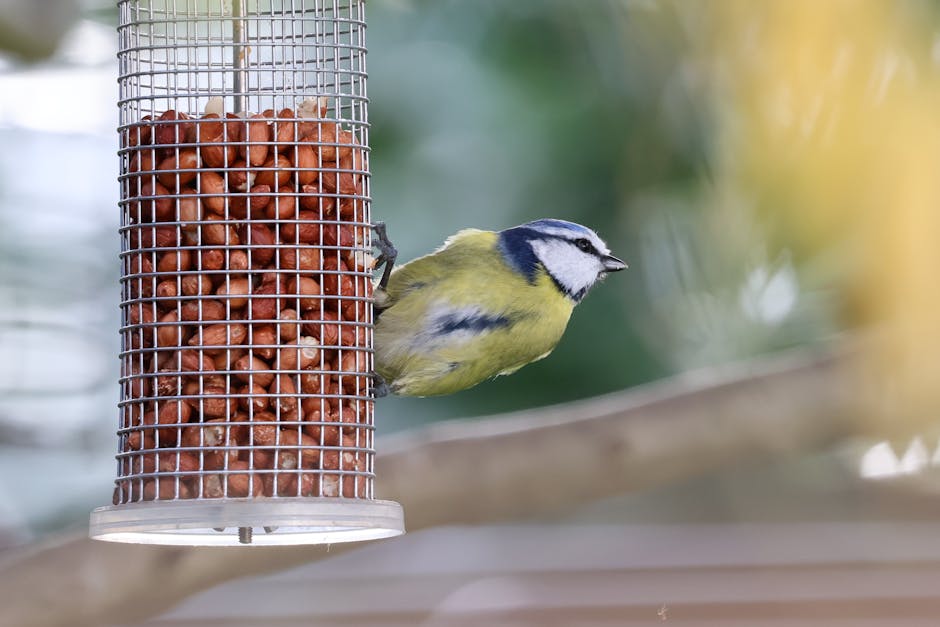
The first decision determines the feeder type. Whole peanuts in the shell require a large-mesh wire feeder or basket-style feeder so birds can grab and work the shells. Shelled peanuts (peanut hearts or peanut pieces) can go into tube feeders with wider ports, platform feeders, or any of the feeders covered above. Most of the feeders in this roundup are optimized for sunflower seed and mixed seed, but shelled peanuts work well in them too. If you specifically want to feed whole peanuts in the shell, a dedicated peanut ring feeder or mesh basket is the right tool.
The Squirrel Problem
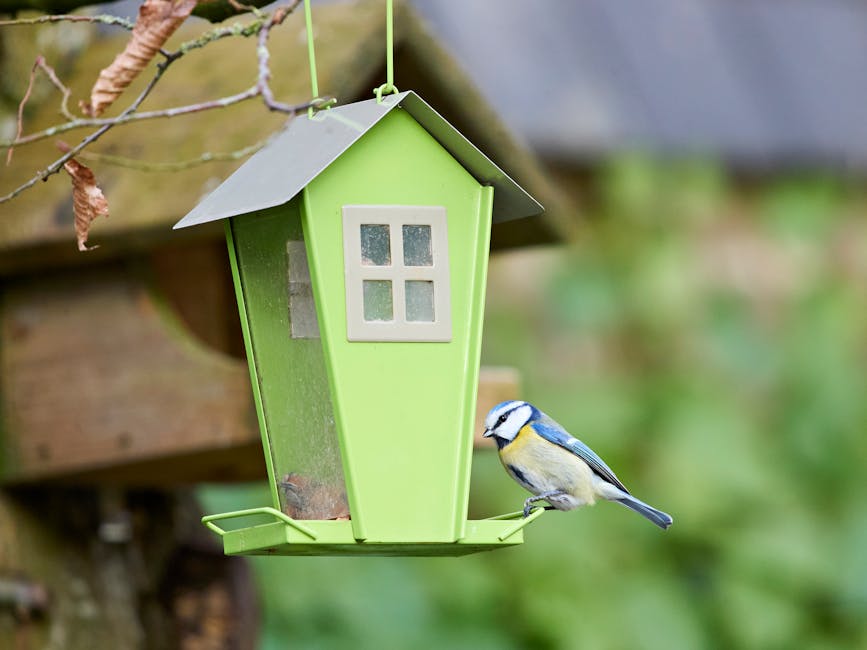
I’ll say this plainly: if you have squirrels, and most North American properties do, an unprotected feeder is a squirrel feeder. Either buy a feeder with an integrated deterrent (the Squirrel Buster Plus or Yankee Flipper) or plan to add a baffle. A squirrel dome for your bird feeder mounted above a tube feeder is the simplest retrofit solution. A full bird feeder baffles for squirrels guide covers the options in more detail if you’re trying to protect an existing setup.
Capacity Matching
Match feeder capacity to your expected traffic. A 1 lb feeder on a property with heavy bird activity means daily refilling from October through March. That’s not a dealbreaker, but go in knowing it. The 5 lb-plus capacity feeders in this roundup are the practical choice for anyone who doesn’t want refilling to become a daily task.
Cleaning Access
A feeder you can’t clean easily won’t get cleaned, and a feeder that doesn’t get cleaned becomes a disease vector. Look for removable tubes, accessible interiors, and disassembly that takes less than five minutes. All four feeders above meet this bar, though the Squirrel Buster Plus takes the most time.
Placement
Feeders within 3 feet of a window or more than 30 feet away are safer for birds than feeders placed in the 4-to-30-foot zone, where window strike risk is highest. Pole mounting at 5 to 6 feet height with baffle protection is the standard setup for most properties. If you’re setting up a deck or balcony station, the bird feeder for deck guide covers hardware and placement options specific to that situation.
,
For more on pairing feeders with mounting hardware, baffles, and seasonal seed strategy, the Bird Feeders & Baths section covers it all in one place.
,
Frequently Asked Questions
What is the best bird feeder specifically for peanuts?
For shelled peanuts, any of the tube feeders with wider ports in this roundup will work. For whole peanuts in the shell, a mesh or wire basket-style feeder designed for that purpose is the better choice. The Squirrel Buster Plus handles shelled peanuts alongside mixed seed without issue. If whole peanuts in the shell are your priority, look at dedicated peanut ring feeders designed with large-mesh openings.
How do I stop squirrels from raiding a peanut feeder?
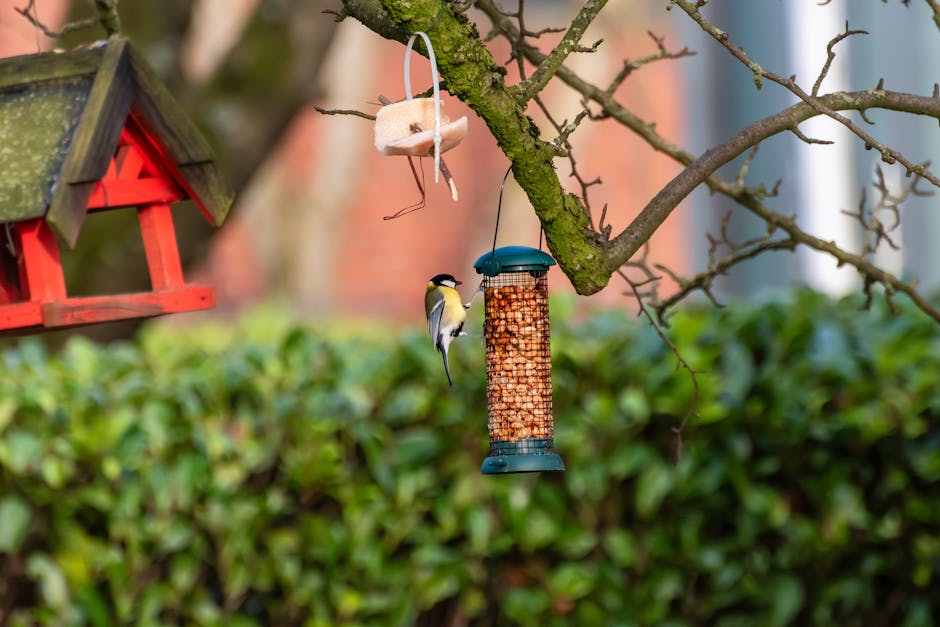
The two reliable approaches are a feeder with integrated weight-activated exclusion (the Squirrel Buster Plus is the passive version, the Yankee Flipper the motorized version) or a squirrel baffle on the pole below the feeder. Baffles work well when the feeder is positioned at least 10 feet from any surface a squirrel can jump from and mounted at 5 to 6 feet height. Placement matters as much as hardware.
Do blue jays eat from tube feeders?
Blue jays prefer platform feeders or trays where they can land comfortably, but they will use tube feeders with perches if the ports are wide enough and the seed is attractive. Peanuts are one of the most reliable attractants for jays. A cardinal ring on the Squirrel Buster Plus, or a platform tray feeder positioned nearby, will bring in jays more consistently than a narrow tube port.
How often should I clean a bird feeder?
Every two to four weeks during active feeding months, and before you put any feeder into storage at the end of the season. Wet seed, mold, and fecal contamination are the primary disease risks. A 10% bleach solution rinse followed by thorough drying is standard. If you see wet or clumped seed at the ports, clean it immediately rather than waiting for the next scheduled interval.
Can I use a window bird feeder year-round?
Yes, with some conditions. Suction cup adhesion can weaken in extreme cold, so check the hold during hard winter freezes and reposition if needed. Seed can freeze and clump in very low temperatures, which may block ports temporarily. The bigger seasonal variable is bird behavior: traffic is typically highest in fall and winter when natural food sources are reduced, and slower in summer when birds are foraging more widely. Window feeders work in all seasons but are most rewarding from October through March.
Droll Yankees Yankee Flipper Squirrel-Proof Bird Feeder
- Weight-activated motor spins the perch when a squirrel lands , reliably deters them
- 5 lb seed capacity; wide seed tube fits sunflower and mixed seed
- Requires charging , dead battery means squirrels have free access
Squirrel Buster Plus Bird Feeder with Cardinal Ring
- Passive weight-activated cage closes seed ports when squirrels grab on , no batteries needed
- 5.1 lb capacity with 6 feeding ports; cardinal ring accommodates larger birds
- More involved cleaning than simple tray feeders
Droll Yankees Classic Sunflower Seed Bird Feeder, 20-Inch
- Ring Pull Advantage lid removes with one hand for fast, mess-free refilling
- Six feeding stations accommodate multiple bird species simultaneously
- No squirrel deterrent , needs a baffle pole or dome purchased separately
Nature's Hangout Window Bird Feeder with Strong Suction Cups and Seed Tray
- Clear acrylic mounting brings birds within inches of indoor viewers , best close-up wildlife experience
- Large capacity (4+ cups) handles multiple species simultaneously
- Birds may take days or weeks to discover and trust a window-mounted feeder