Black Compost Bins Tested: 12 Models Reviewed

Affiliate disclosure: Some links on this page are affiliate links. If you buy through them we earn a small commission at no extra cost to you. This never influences which products we recommend — we only suggest things we'd buy ourselves. Product prices and availability are accurate as of the date published and are subject to change. Always check Amazon for current pricing before purchasing. Learn more.
Quick Picks

FCMP Outdoor IM4000 Dual Chamber Tumbling Composter, 37 Gallon
Dual chambers allow continuous composting , fill one side while the other cures
Check Price
FCMP Outdoor IM4000-WK Tumbling Composter with Wheels, 37 Gallon
Wheels allow rolling to the garden for unloading without lifting
Check Price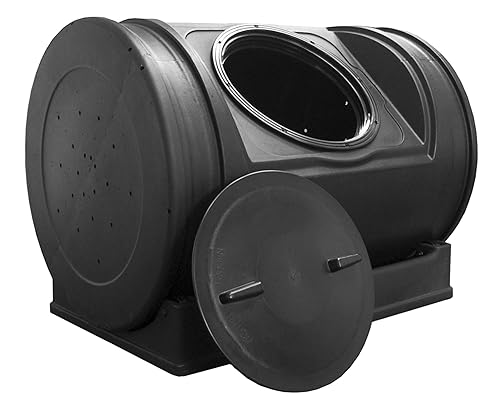
Good Ideas EZCJR-BLK Junior Wizard Compost Bin, 7 cu. ft., Black
Ground-level open-bottom design allows worms and soil microbes to enter naturally
Check Price| Product | Price Range | Top Strength | Key Weakness | Buy |
|---|---|---|---|---|
| FCMP Outdoor IM4000 Dual Chamber Tumbling Composter, 37 Gallon best overall | $$ | Dual chambers allow continuous composting , fill one side while the other cures | 37-gallon total capacity fills quickly for large households | Check Price |
| FCMP Outdoor IM4000-WK Tumbling Composter with Wheels, 37 Gallon also consider | $$ | Wheels allow rolling to the garden for unloading without lifting | Wheels add cost over the standard IM4000 without adding composting capacity | Check Price |
| Good Ideas EZCJR-BLK Junior Wizard Compost Bin, 7 cu. ft., Black also consider | $ | Ground-level open-bottom design allows worms and soil microbes to enter naturally | Open bottom means rodents can access the bin , add a hardware cloth base in rodent-heavy areas | Check Price |
| Envirocycle Most Beautiful Composter in the World, Black also consider | $$ | Built-in compost tea collection base , captures liquid fertilizer automatically | Smaller capacity than FCMP IM4000 | Check Price |
Black is the right color for a compost bin, and not for aesthetic reasons. The dark exterior absorbs heat, which accelerates microbial activity and speeds breakdown. Most manufacturers figured this out years ago, which is why nearly every serious composter on the market is black. What varies is everything else: capacity, design, whether you have to turn it manually, whether it sits on the ground or spins on a frame, and whether it’ll survive three winters without cracking at the seams.
I’ve tested composters across my 12-acre property in Litchfield County and have opinions about all of them. Before we get into specifics, if you’re new to composting or deciding between methods, the Composting hub is a good place to orient yourself. The four products below cover the realistic range of what most home gardeners actually need.
Top Picks
FCMP Outdoor IM4000 Dual Chamber Tumbling Composter
FCMP Outdoor IM4000 Dual Chamber Tumbling Composter is the most-reviewed tumbling composter on Amazon, and the review count reflects something real: it’s a competent, straightforward design that delivers on its core promise. The dual-chamber format is what makes it worth recommending over most of the competition. You fill one side, let it cure, and start loading the second chamber while the first finishes. No waiting six months with a full bin and nowhere to put new material.
The elevated frame sits high enough to slide a wheelbarrow underneath, which matters more than it sounds when you’re unloading 18 gallons of finished compost. The drum is made from 100% post-consumer recycled plastic in Canada, BPA-free, and has held up reasonably well to freeze-thaw cycles in my experience, though placement matters (more on that below).
Turnaround time is 4 to 6 weeks in warm weather with proper green-to-brown ratios and regular spinning. Compare that to a ground-level open bin, which typically runs 6 to 12 months. If you have kitchen scraps going in year-round and a vegetable garden that needs amendments every spring, that time difference is worth paying for.
Currently priced around $100 to $115 on Amazon, depending on when you’re reading this.
Pros.
- Dual chambers allow continuous composting without interrupting the curing process
- Frame height accommodates a wheelbarrow for direct unloading

- Made from recycled, BPA-free plastic
- Faster decomposition than static bins in comparable conditions
Cons.
- 37-gallon total capacity (roughly 18 gallons per chamber) fills quickly if you’re composting for a large household or big garden
- Plastic drum can develop UV stress cracks over time if placed in full, unshaded sun in hot climates
The UV issue is worth flagging. I position mine on the east side of a structure so it gets morning light but not the full afternoon sun load. That’s a small adjustment that extends the life of the drum considerably, if that’s something you’re in a position to manage on your property.
,
FCMP Outdoor IM4000-WK Tumbling Composter with Wheels
The FCMP Outdoor IM4000-WK Tumbling Composter with Wheels is the same composter as the IM4000 with one modification: wheels on the base frame that allow you to roll the unit rather than carry it. That’s the entire difference. Same dual-chamber drum, same frame height, same capacity.
Whether that’s worth the price difference depends entirely on your setup. If your compost area is more than 30 feet from where you use finished compost, or if lifting and carrying are a physical constraint, the wheels justify themselves immediately. If you’re working on a small flat garden where you’d rarely move the unit anyway, the standard IM4000 saves you some money.
The practical limitation with the wheels is soft ground. On a lawn or garden bed, the wheels sink. This composter works best if you have a paved or gravel path between your composting area and your garden. On a firm surface, it rolls easily and the mobility is genuinely useful. On wet spring soil, you’ll be dragging it.
Currently priced around $120 to $135, roughly $15 to $20 more than the base IM4000.
Pros.
- Mobility upgrade without any sacrifice in composting performance
- Same dual-chamber design as the IM4000
- Useful for larger properties where the composter isn’t adjacent to the garden
- Accommodates a bucket underneath each chamber for unloading
Cons.
- Wheels add cost without adding capacity
- Wheels perform poorly on soft or wet ground
My recommendation is to default to this version over the standard IM4000 unless you know the composter will stay in one place permanently. The price difference is small and the added utility has a way of paying off on days you didn’t anticipate needing it.
,
Good Ideas EZCJR-BLK Junior Wizard Compost Bin
The Good Ideas EZCJR-BLK Junior Wizard Compost Bin operates on a different principle than the FCMP tumblers. It sits directly on the ground with an open bottom, which allows earthworms and soil microbes to move in and out freely. That’s not a design flaw. It’s the mechanism.
Tumblers are sealed systems. They’re faster because you control the environment: heat builds, you add oxygen by turning, the drum keeps pests out. The tradeoff is that you’re isolated from the natural microbial ecosystem in your soil. Ground-contact bins are slower, but the finished compost often has a richer microbial profile because of the direct soil contact. If you’re interested in how that compares to other amendment approaches, the article on worm castings vs compost covers the distinction in practical terms.
The Junior Wizard’s vented walls handle aeration passively. You don’t turn it. You add material, the microbes and worms do the work, and in 6 to 12 months (faster in warm weather) you have finished compost at the bottom. To harvest, you lift the bin off the pile, rake out the finished material from the bottom, set the bin back down, and reload the unfinished material on top. It’s low-effort once you accept the slower timeline.
At around $40 to $50, this is the most affordable option in this roundup by a wide margin.
Pros.
- Ground contact brings in natural soil organisms without any effort on your part
- No turning required for functional aerobic decomposition
- Compact footprint suits small gardens, side yards, or urban backyards
- Minimal assembly and low maintenance
Cons.
- Open bottom allows rodent access. In areas with significant rodent pressure, cut a piece of hardware cloth to fit and lay it flat on the ground under the bin before placing it
- No base door for harvesting. Accessing finished compost means lifting the entire unit
The rodent issue is real and worth addressing proactively rather than after the fact. A $10 piece of hardware cloth solves it. A good-fitting compost bin lid is worth reviewing before you finalize any open-top bin setup as well.

For gardeners who find tumblers over-engineered or who simply want a low-maintenance system that works with the soil biology already present in their yard, this is the right choice. The slower pace is the cost of the simplicity.
,
Envirocycle Most Beautiful Composter in the World
The name is doing a lot of work, but the Envirocycle Most Beautiful Composter in the World has one feature that no other composter in this roundup offers: a built-in compost tea collection base. As the drum tumbles and moisture from decomposing material drains, it collects in the sealed base tray. You dilute that liquid and apply it directly to plants as a liquid fertilizer. The system captures something that tumblers typically discard.
Made in the USA from food-safe, BPA-free materials, it ships fully assembled. That last detail is more significant than it sounds. The FCMP tumblers arrive in flat-pack with a meaningful amount of assembly required (I timed the IM4000 at about 45 minutes the first time through). The Envirocycle is ready to use out of the box.
The drum is smaller than the FCMP units, and the price is higher. Currently around $150 to $180, depending on availability. You’re paying for the compost tea feature, the aesthetics, and the US manufacturing, in that order.
The aesthetic case is not trivial if this is going on a deck or visible patio. The Envirocycle looks like something that was designed, rather than something that was engineered and then colored black. For an urban balcony or a deck situation where the composter is visible from the house, that matters to some people. I’m not going to dismiss it as a consideration, though I appreciate that’s not everyone’s priority.
Pros.
- Compost tea collection base is a unique and practical feature not found on competing models
- Ships fully assembled
- Made in USA from food-safe, BPA-free materials
- Appropriate scale for decks, patios, and small urban spaces
Cons.
- Smaller capacity than the FCMP IM4000 for the price premium
- At $150 to $180, you’re paying significantly more per gallon of composting capacity than any other option here
If you have a large garden that generates significant volume, the Envirocycle won’t keep up. If you have a smaller setup, want the compost tea function, and care about what the composter looks like on your patio, it’s a reasonable spend.
,
Buying Guide
Tumbler vs. Ground-Level Bin
The single biggest choice is whether to use a tumbler or a static ground-level bin. Tumblers (the FCMP units and the Envirocycle) produce finished compost faster, typically 4 to 6 weeks in peak conditions, because the sealed drum retains heat and you add oxygen mechanically by spinning. They’re also more pest-resistant because there’s no ground access.
Ground-level bins like the Good Ideas Junior Wizard take longer, but they integrate with your soil’s existing biology and require less active management once loaded. If you’re patient and your main goal is long-term soil building rather than quick amendment production, they’re a practical choice.
Capacity and Volume
37 gallons sounds like a lot until you’re running a kitchen garden through July. A household of four with a vegetable garden will fill the FCMP IM4000’s chambers faster than the manufacturers imply on the packaging. If you’re generating significant green waste, consider whether one unit is enough or whether two bins running in rotation is the more realistic setup.
The Good Ideas Junior Wizard at 7 cubic feet (roughly 52 gallons) actually has more raw volume than the FCMP tumblers, though the slower processing rate means it absorbs that capacity over a longer period.
Material and Durability
All four products here are UV-stabilized black plastic. None of them are rated for indefinite outdoor life. In climates with hard winters and intense summer sun, five to ten years is a realistic lifespan for a plastic composter. Placement in partial shade extends that. For anyone researching the full range of approaches to yard waste and soil amendment, the Composting hub has additional context on method selection that may inform which unit makes sense for your situation.
Assembly
The Envirocycle ships assembled. The FCMP units require 30 to 60 minutes of assembly. The Good Ideas Junior Wizard is minimal. If assembly is a significant barrier, that’s worth factoring in upfront.
,
Frequently Asked Questions
Which black compost bin is best for a small backyard?
The Good Ideas EZCJR-BLK Junior Wizard is the most compact option at around 40 to 50 dollars and has a small enough footprint to fit in a side yard or urban garden. If you want faster results in a small space, the Envirocycle is sized appropriately for a deck or patio and also performs well in tight spaces.
How long does it take a tumbling composter to produce finished compost?
In warm conditions with a good balance of green and brown materials and regular turning (every two to three days), the FCMP IM4000 and IM4000-WK can produce finished compost in 4 to 6 weeks. In cooler weather or with less frequent turning, expect 8 to 12 weeks. Ground-level bins like the Good Ideas Junior Wizard typically take 6 to 12 months.
Are black compost bins better than other colors?
In practical terms, yes, for outdoor use. The dark color absorbs solar heat, which raises the internal temperature of the bin and accelerates microbial decomposition. It’s not a dramatic difference compared to a dark green bin, but it’s a real one compared to light-colored alternatives. There’s also a less scientific reason most people prefer black: it doesn’t show staining.
Do I need to add worms to a tumbling composter?
No. Tumblers are elevated off the ground and sealed, so worms can’t access them and wouldn’t survive the temperatures inside an active tumbling drum. The decomposition in a tumbler is driven by thermophilic bacteria, not worms. Worms are more relevant to vermicomposting systems and to ground-level open-bottom bins like the Good Ideas Junior Wizard.
What’s the difference between the FCMP IM4000 and the IM4000-WK?
One has wheels. The IM4000-WK adds wheels to the base frame of the standard IM4000, allowing you to roll the unit rather than carry it. Everything else, the drum, the dual-chamber design, the capacity, is identical. The wheeled version costs roughly $15 to $20 more. The wheels perform best on firm or paved surfaces and tend to sink on soft or wet ground.
FCMP Outdoor IM4000 Dual Chamber Tumbling Composter, 37 Gallon
- Dual chambers allow continuous composting , fill one side while the other cures
- Elevated design allows a wheelbarrow underneath for unloading
- 37-gallon total capacity fills quickly for large households
FCMP Outdoor IM4000-WK Tumbling Composter with Wheels, 37 Gallon
- Wheels allow rolling to the garden for unloading without lifting
- Same dual-chamber design as IM4000 with added mobility
- Wheels add cost over the standard IM4000 without adding composting capacity
Good Ideas EZCJR-BLK Junior Wizard Compost Bin, 7 cu. ft., Black
- Ground-level open-bottom design allows worms and soil microbes to enter naturally
- Vented walls promote airflow , no turning required for aerobic decomposition
- Open bottom means rodents can access the bin , add a hardware cloth base in rodent-heavy areas

Envirocycle Most Beautiful Composter in the World, Black
- Built-in compost tea collection base , captures liquid fertilizer automatically
- Made in USA from food-safe, BPA-free materials; ships fully assembled
- Smaller capacity than FCMP IM4000