Cast Aluminum Outdoor Dining Set Review: Durability Test

Affiliate disclosure: Some links on this page are affiliate links. If you buy through them we earn a small commission at no extra cost to you. This never influences which products we recommend — we only suggest things we'd buy ourselves. Product prices and availability are accurate as of the date published and are subject to change. Always check Amazon for current pricing before purchasing. Learn more.

All-weather HDPE , won't rot, splinter, or require seasonal storage
Check PriceIf you’ve spent any time searching for a cast aluminum outdoor dining set, you already know the problem: the category is flooded with sets that look adequate in photos and start wobbling within two seasons. Powder-coated frames pit, weld points crack, and cushions that weren’t rated for actual weather end up in the trash by October. I’ve been through enough of this cycle on my 12-acre property that I stopped treating outdoor furniture as disposable, which is how I ended up spending more time than I probably should evaluating what actually holds up.
This review covers the POLYWOOD Nautical Trestle 7-Piece Dining Set in Teak, which is not, technically, cast aluminum. It’s HDPE lumber. I’m including it in this category because it directly competes with cast aluminum sets at the premium end of the market, and because if you’re seriously comparing options at this price point, you should know about it before you buy something else. Our full Outdoor Furniture section covers the range from budget aluminum to high-end teak, and this set sits at an interesting crossroads.
Quick Verdict
The POLYWOOD Nautical Trestle 7-Piece Dining Set is the right answer for anyone who wants a large, permanent outdoor dining setup and genuinely never wants to think about it again. It won’t rot, splinter, fade significantly, or require seasonal storage. The 73-inch table seats six comfortably. At around $2,400 to $2,800 depending on when you’re buying (prices fluctuate), it’s not cheap. But compare that to a real teak dining set, which runs $3,000 to $8,000 and requires annual oiling to maintain its color and prevent cracking, and the math shifts. POLYWOOD’s pitch is essentially: pay once, do nothing. That pitch holds up.
If you want something you can move around frequently, or if you’re furnishing a smaller patio and don’t need six seats, this set is probably more than you need.
Key Specs
Material. High-density polyethylene (HDPE) lumber made from recycled plastics. Stainless steel hardware. This is not cast aluminum, but it competes directly with premium cast aluminum sets on durability and price.
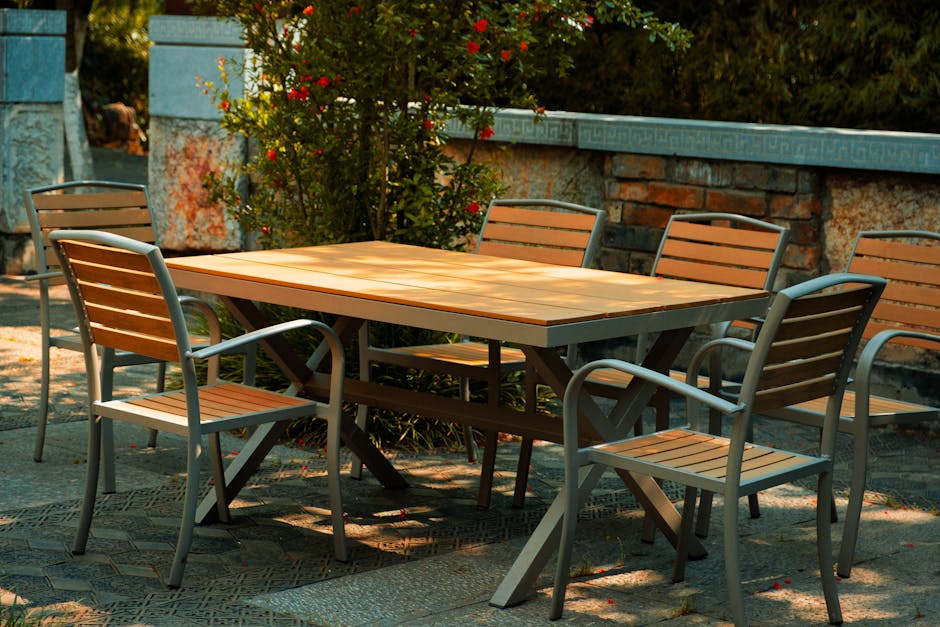
Table dimensions. 73 inches long by 38 inches wide. Trestle base construction. Seats six adults without crowding, eight in a pinch.
Chairs included. Six chairs with a classic slatted back. No cushions included standard. The teak color option gives a convincing warm wood appearance.
Weight. This is not a light set. The table alone runs around 100 pounds. Each chair is approximately 29 pounds. Moving this setup regularly is not practical, and POLYWOOD doesn’t design for that use case.
Warranty. 20-year limited warranty from POLYWOOD, which is the strongest warranty in this category by a significant margin. Most cast aluminum sets offer 1 to 3 years.
Assembly. Some required. POLYWOOD recommends two people for the table, which is accurate advice.
Performance and Testing
Weather Resistance
I’ve had POLYWOOD furniture on my property for several years, through hard winters, wet springs with standing water on the patio, and summers that hit sustained heat and UV exposure. The material does not absorb water, which eliminates the primary failure mode for wood furniture. There’s no sealing, no staining, no annual treatment. Color retention is good. After a few seasons, the teak-colored pieces look essentially the same as they did new, with minor surface dulling that a basic cleaning removes.
Cast aluminum handles weather well too, but the comparison point here is real teak. I looked closely at a teak outdoor dining set before landing on POLYWOOD, and the maintenance calculus tipped me away from it. Teak that’s left untreated weathers to a silvery gray, which some people prefer aesthetically. Teak that you want to keep looking warm and honey-colored needs oiling every 12 months, possibly more if it’s in direct sun. POLYWOOD needs neither.
Structural Stability
The trestle base design on this table is solid. There’s no wobble, no flex in the tabletop under load. I’ve had it hold up through outdoor dinners where the table was fully loaded with dishes, drinks, and serving pieces without any instability. The slatted chair backs are rigid. The seats don’t creak after extended use, which is something I’ve noticed failing on cheaper sets within a year or two.
One honest note: the weight that makes this set feel permanent is also what makes repositioning it an event rather than an afternoon task. If you rearrange your outdoor space seasonally or like to shift furniture toward the sun or shade, that’s a real constraint here.
Comfort and Usability
The chairs are more comfortable than you’d expect from a rigid HDPE frame with no cushion. The seat angle and back angle are well-designed. That said, for longer dinners, cushions make a noticeable difference. POLYWOOD sells cushions separately, and they’re designed to fit. Third-party cushions with Sunbrella fabric work well and hold up better than standard polyester options. If you’re outfitting this set for regular use, budget an additional $200 to $400 for cushions. (I’ve written separately about Sunbrella Adirondack chair cushions and the same durability logic applies here. Sunbrella fabric is worth the premium if you’re leaving cushions outside.)
The 73-inch table length is generous. Six place settings fit without the elbow-cramping that happens with 60-inch tables, and there’s room for a centerpiece or serving dishes in the middle. For a family that eats outside regularly from late spring through fall, this is the right size.
Cleaning and Maintenance
Soap and water. Occasionally a soft brush if there’s mildew in the slats from a wet season. That’s it. No sanding, no oiling, no covering required for winter (though covering doesn’t hurt). I’ve left POLYWOOD pieces out through December and brought them through just fine.
Pros and Cons
Pros.
- All-weather material that genuinely requires no seasonal treatment or storage
- 73-inch table is large enough for real use, not the downsized version of “seats 6”
- 20-year warranty is exceptional and not marketing language. POLYWOOD honors it.
- Teak color is convincing at distance and in photos. It does not look like plastic furniture.
- Long-term cost argument against real teak is strong
Cons.
- Heavy. Very heavy. This is furniture you place and leave.
- Premium price. Around $2,400 to $2,800 is a real commitment.
- No cushions included. Add $200 to $400 if you want them.
- If you want actual cast aluminum construction for specific reasons (lighter weight, specific aesthetic), this doesn’t deliver that.
- Color options are limited compared to cast aluminum sets, which often come in a wider palette
Who It’s For
This set makes sense if you have a fixed outdoor dining area and want to set it up once and stop thinking about it. Large family, regular outdoor dinners, property where the furniture lives outside year-round. The economics work most clearly if you’re the kind of person who was already looking at real teak and balking at the maintenance.
If you’ve been looking at a teak Adirondack chair or similar teak pieces for the rest of your outdoor space, POLYWOOD’s teak color will coordinate reasonably well at normal viewing distances, though a side-by-side comparison will show the difference.
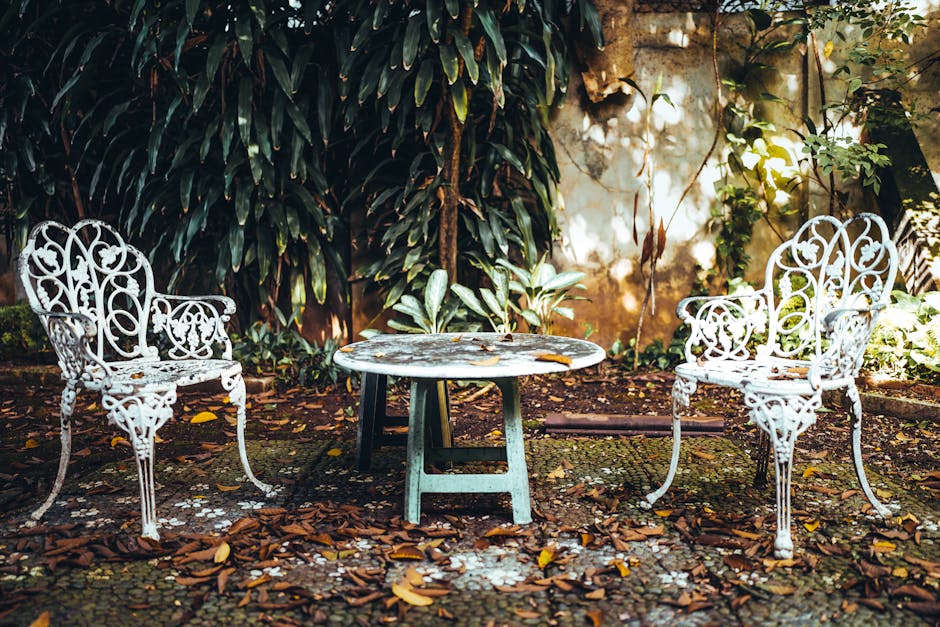
It’s also the right choice if you’ve had cheaper cast aluminum sets fail on you. Entry-level cast aluminum, in the $500 to $900 range for a seven-piece set, tends to have thin frames, inferior powder coating that chips and rusts at the chips, and wobbly chair construction. POLYWOOD sidesteps all of that by using a material that doesn’t fail in the same ways.
Who it’s not for: anyone who needs to move furniture regularly, has a smaller patio where a 73-inch table would dominate the space, or specifically wants the look and feel of metal furniture. For a lighter-weight option that handles weather well, a quality cast aluminum set from a brand like Telescope Casual or Brown Jordan is worth comparing. Those run $1,500 to $3,500 for a full dining set depending on configuration, and they have the weight and aesthetic advantage if you’re moving pieces around seasonally.
One more category worth flagging: if you’re furnishing an outdoor space more completely and thinking about seating beyond the dining area, a large Adirondack chair in POLYWOOD’s HDPE material would carry the same durability logic and look coherent alongside this set.
The broader picture on outdoor dining furniture, including cast aluminum, teak, and HDPE options across price points, is covered in our outdoor furniture section if you’re still deciding between categories.
Frequently Asked Questions
Is the POLYWOOD Nautical Trestle set actually better than a cast aluminum outdoor dining set?
It depends what you’re optimizing for. POLYWOOD HDPE is lighter to ship but heavier in place than most cast aluminum. It handles weather at least as well, requires less maintenance than most metal sets (no rust risk at all, no powder coat chipping), and carries a significantly longer warranty. If weight matters because you move furniture often, cast aluminum has the advantage. For a permanent setup, POLYWOOD wins on long-term simplicity.
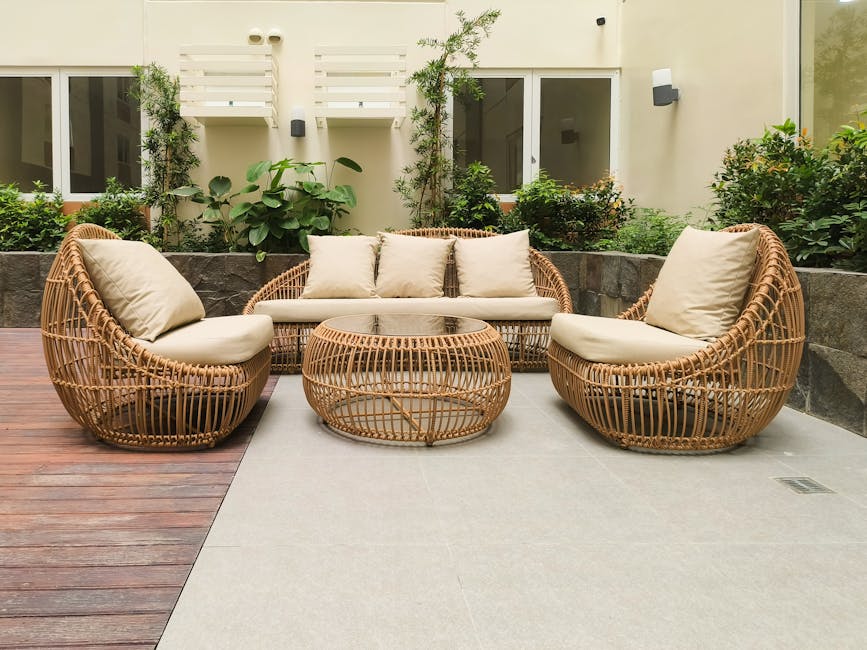
Does POLYWOOD furniture look cheap or obviously plastic in person?
The teak color option, in particular, reads as wood from normal distances. Up close, the texture is smooth rather than grained, so it doesn’t fool anyone who’s looking. For outdoor dining purposes, where the furniture is a backdrop to the meal rather than a decorative focal point, it holds up well aesthetically. Photos on POLYWOOD’s site are accurate to what you receive.
Do I need to store this set in winter?
No. POLYWOOD’s HDPE material is designed to stay outside year-round in any climate. Covering it during heavy snow or ice is a reasonable precaution, but it won’t degrade from exposure. This is one of the primary reasons to choose POLYWOOD over wood or standard metal alternatives.
What cushions work with the POLYWOOD Nautical chairs?
POLYWOOD sells branded cushions designed to fit their chairs, typically in the $30 to $60 range per cushion depending on style. Third-party options with Sunbrella fabric are worth considering at a similar or slightly higher price point. Sunbrella fabric resists fading and mildew significantly better than standard polyester outdoor fabric, which matters if cushions are staying outside through the season. For a six-chair set, budget the full cushion cost before committing to the set price.
How difficult is assembly?
Moderately involved. The chairs are straightforward and can be assembled solo in about 20 minutes each. The table requires two people, both because of the weight and because aligning the trestle base while securing hardware is genuinely awkward alone. POLYWOOD’s instructions are clear. Set aside a full morning for the complete seven-piece assembly and you won’t feel rushed.
POLYWOOD Nautical Trestle 7-Piece Dining Set, Teak: Pros & Cons
- All-weather HDPE , won't rot, splinter, or require seasonal storage
- Seats 6; 73-inch table works for large family gatherings
- Very heavy set; not designed to move frequently